
It usually starts in October or November with the sound of scratching overhead after the house goes quiet. Most homeowners assume it is just a pest problem. Yet the bigger casualty is often the insulation, which gets damaged and left behind long after the animals are gone.
Rodents make themselves at home in the attic. They nest in and tunnel through attic insulation, and soil it along the way. This means coverage drops where your home needs it most. Mice often leave in the spring, which fools many homeowners into thinking the problem resolved itself. Meanwhile, the soiled material sits in the humid attic for months.
Late fall is peak attic entry season because rodents seek warm, dry shelter as nights cool and winter approaches. Insulation that has been nested in or soiled needs to come out. Topping it over only traps the problem under the new layer.
Our region has been classified by the Department of Energy as a hot-humid climate zone based on our annual precipitation and high warm-season wet bulb hours. That means homes throughout North Florida and South Georgia must live with that moisture and what it means for rodent-damaged insulation. The fix works best as a staged sequence. Pests come out first, followed by insulation removal and air sealing. Then new insulation goes in. If you’ve heard noises overhead, an attic evaluation is a smart next step.
Why Late Fall Is When Attic Pests Move in and Why Our Season Looks Different
The Seasonal Trigger
So, when do rodents get in the attic? Most often, rodents move into warm houses in fall to prepare for winter. Even if mice leave in spring, the property still needs trapping and repair.
In South Georgia and North Florida, mild winters mean rodent activity slows but keeps going, letting attic rodent damage build quietly. This aligns with our region’s hot-humid climate classification.
Which Pests Move In
Three main rodent species live with people, and all three are commonly found in both Florida and Georgia. Two are rats, the Norway rat and the roof rat, and the third is the house mouse.
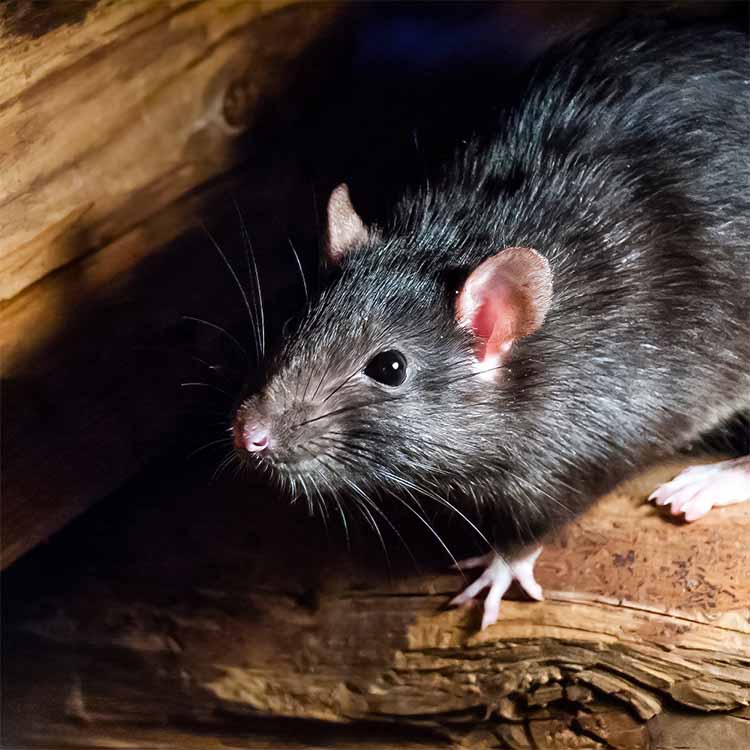
Roof rats are climbers. They thrive in attics and roof spaces as well as palm trees and shrubbery. They prefer to nest off the ground, which is why roof rats in the attic are a common find. Norway rats are most common along Florida’s coasts and canals, and they generally don’t climb. This means inland attics in Valdosta and Tallahassee tend to have more climbers and mice than burrowers. House mice normally live outdoors in fields and migrate indoors.
How They Get Up There
Rats will climb anything their claws can grip, including wires and pipes, and even rough walls. They can jump 36 inches straight up and 48 inches across. And they can even leap 8 feet from a tree to a house when the branch is 15 feet above the roof. Pines and live oaks are common across South Georgia and North Florida, and dense landscaping adds even more launch points.
What Rodent-Damaged Attic Insulation Actually Looks Like
Rodent-damaged attic insulation rarely looks dramatic from the attic entrance, but the signs are clear up close.
The Physical Damage
Rats are destructive in attics. They often leave nests of chewed paper and cloth, and they gnaw electrical wires and rafters. Rodents gnaw daily to keep their teeth short because their teeth grow 4½ to 5½ inches per year. In insulation, tunneling and matting reduce depth and leave bare spots.
The Contamination
This is where rodent-contaminated insulation becomes a real concern. Droppings and urine soil the house, and rodents can carry fleas and ticks. Rodents urinate while running, leaving telltale streaks. Roof rats may also leave swing marks on rafters.
Droppings and gnaw marks are two key signs of rodents in your attic. Their waste can spread through contaminated air, so safe cleanup matters for preventing illness. You can’t clean soiled insulation in place. It can only be removed.
Why the Humidity Here Makes It Worse
Hot-humid regions like ours see over 20 inches of annual rain and long muggy summers. Soiled, damp insulation sitting in that air for months makes moisture harder to manage. Learn more about how humidity affects insulation in South Georgia and North Florida.
Signs to Watch For
Knowing the signs of rodents in attic insulation helps you act early. Watch for:
- Scratching or gnawing in the attic at night
- Droppings on or near the insulation
- A musty, urine-like odor
- Matted or tunneled batts
- Chewed wiring

A musty odor often points to mice rather than rats. If droppings return after cleaning, that indicates rodents are still active.
The Right Order of Operations: Pests Out, Insulation Out, Gaps Sealed, Attic Rebuilt
Step 1: Animals out first
Rodents are easier to control before they become established. A licensed pest company handles animal removal and disinfection. A proper insulation removal process runs in stages. The pest company removes the animals, and the insulation crew takes out the insulation. The pest company then disinfects the space before installing new insulation.
Step 2: Remove the soiled material
When nesting or soiling is present, it is important to remove damaged insulation. Topping over soiled material traps odor and contamination underneath. Removal is also the only way to inspect the attic deck and top plates, along with the wiring. Because rodents gnaw to create better access points, hidden damage is common.
Step 3: Close the entry points
To rodent-proof the attic, you need to change your building’s structure to keep rodents out. Rats can squeeze through ½-inch cracks and mice through ¼-inch cracks, so any gap a pencil fits through can admit a mouse. Rodent-resistant materials include 26-gauge or heavier sheet metal and 19-gauge hardware cloth with openings no larger than ¼ inch. Key spots to rodent-proof include roof vents and eave vents, plus exhaust fans and pipe penetrations.
Rodent proofing the attic only works if you block every entry point. Inspect and repair any breaks during the first two weeks. Closing entry holes is one of the most effective preventive steps you can take.

Exclusion and air sealing overlap. Exclusion uses pest-resistant hardware, while air sealing closes smaller gaps for energy performance.
Step 4: Rebuild the attic system
During removal, crews can air seal from the top and add baffles and vents where they’re missing. Top plates and penetrations get sealed, too. The ASU Energy Efficiency Center, citing the DOE, reports that adding appropriate insulation saves an average of 15% on electricity bills. Air sealing adds comfort and draft control on top of that.
For many rebuilt attics, fiberglass insulation is a dependable, proven choice.
Whether you need to replace insulation after mice or rats, a late-fall inspection beats discovering a problem in spring. By then, the damage has had months to build.
Frequently Asked Questions
A Clean Attic Starts with the Right Order
The sequence is simple: animals out, insulation out, gaps closed and attic rebuilt. A late-fall attic check is cheaper and cleaner than a spring discovery. Once rodents have nested in or soiled your insulation, removal is the only route to a clean, code-ready attic.
Homeowners looking for attic insulation removal South Georgia options in Valdosta and Adel, or attic insulation removal North Florida help in Tallahassee, can count on Quality Insulation of Valdosta. Our crew safely removes damaged insulation to prepare your attic for a new, sealed, and ready-to-perform system. Call us today at 229-444-1823 in Georgia or 850-519-3003 in Florida, or visit us online to schedule your free estimate.
References
Kohl, Michel, and Michael T. Mengak. “Rats and Mice: Get Them Out of Your House and Yard.” Circular 970, University of Georgia Cooperative Extension, 5 Nov. 2025, https://fieldreport.caes.uga.edu/publications/C970/rats-and-mice-get-them-out-of-your-house-and-yard/.
Koehler, P. G., and W. H. Kern, Jr. “Rat and Mouse Control.” ENY-224/DH044, UF/IFAS Extension Electronic Data Information Source, University of Florida, https://journals.flvc.org/edis/article/view/136514/141097.
United States, Centers for Disease Control and Prevention. “Controlling Wild Rodent Infestations.” Healthy Pets, Healthy People, 8 Apr. 2024, www.cdc.gov/healthy-pets/rodent-control/index.html.
United States, Department of Energy. “Climate Zones.” Building America, www.energy.gov/cmei/buildings/climate-zones.
Vermeer, Trenton. “Energy Savings by Insulation.” ASU Energy Efficiency Center, Arizona State University, 11 July 2023, https://eec.asu.edu/2023/07/11/energy-savings-by-insulation/.